Ash-Mac's covert nationalization
Good Morning, Midnight (Reginald Hill Edition)Ash-Mac's covert nationalization is Laurence Waverley’s description of the hidden state oversight that followed Ashur-Proffitt’s takeover of Maciver’s business. What looked to the public like an ordinary commercial transfer was, in his account, a covert assumption of responsibility by government figures for the company’s activities and security. The arrangement exposes the gap between the language of privatization and the state’s continuing involvement in a strategically sensitive arms enterprise.
Public Takeover, Hidden Responsibility
To outside observers, the acquisition could be understood as another instance of commercial globalization, or as part of the Thatcherite sell-off of British industry. Waverley presents both readings as surface appearances. Beneath them, he says, the transaction formed part of a changing global black economy that persisted through elections, revolutions, and other public changes of political order.
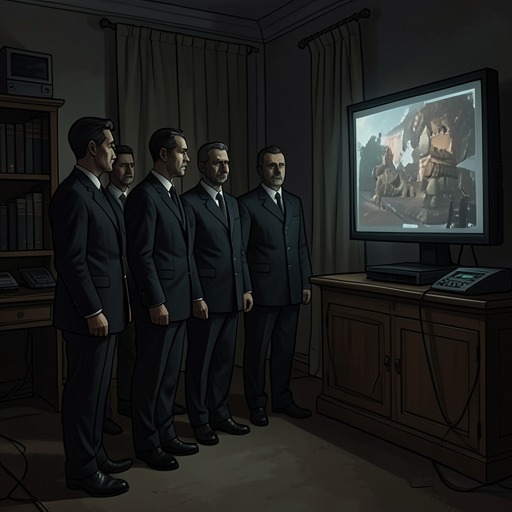
His description of the takeover as a kind of covert nationalization turns the usual account of privatization inside out. Ash-Mac was not publicly announced as a state-owned concern; rather, its activities and security became the discreet responsibility of certain people in Whitehall, while others in Washington were assigned a watching brief. The distinction matters: the state’s role operated through oversight and security responsibility, not a visible change in ownership.
Monitoring and Managed Secrecy
Waverley says the hidden arrangement was protected by an abundance of rumours and counter-rumours. Government agencies, he explains, had machinery for circulating competing stories, making concealment less a matter of perfect silence than of directing attention among multiple accounts. The company’s official image and its unofficial supervision could therefore coexist without becoming readily legible to the public.
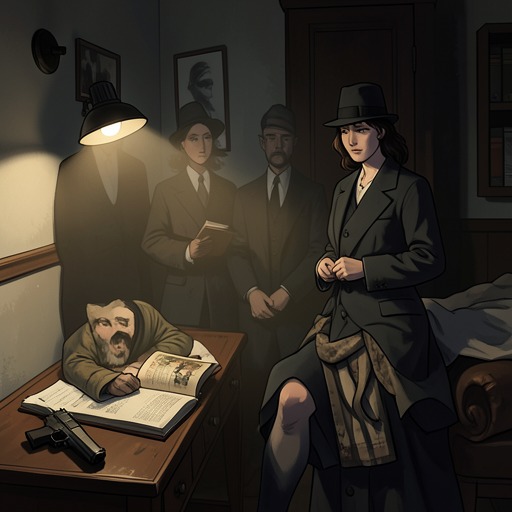
The American management at Ash-Mac assured Waverley’s superiors that matters were under control. They nevertheless sent him to Yorkshire to assess the situation independently, using a cover as a Value Added Tax investigator. The role let him approach Palinurus Maciver Senior under the pretext of comparing the company’s record-keeping before and after the takeover. Once Maciver understood that Waverley disapproved of the new regime, he began sharing his concerns about the firm. This account shows how the covert oversight relied on a credible bureaucratic identity and on gaining access to information through a relationship that appeared to concern routine financial administration.
Waverley’s investigation of Jake Gallipot supplied another channel. He describes Gallipot as ruthless, ingenious, venal, and burdened by a dubious past; a combination of threat and bribery brought him onto the investigators’ side. Maciver, by contrast, had been isolated from legitimate access to sensitive areas of the company and had hired Gallipot to obtain evidence. Waverley considered Maciver’s lack of supporting proof a vulnerability that could leave him open to public ridicule as a disgruntled former owner, and recommended undermining his credibility while allowing events to take their course.
Sanctions, Arms, and Political Risk
The stakes behind the oversight were not merely corporate. Maciver began accusing the company of sanctions busting and other illegal trading. Waverley recognized that hard evidence could turn those claims into a scandal, while officials in public and covert agencies might use such a scandal to advance their own interests or causes. In this account, the state’s interest in the company includes both monitoring its conduct and controlling the political consequences of what might be exposed.
A satirical account of arms dealings elsewhere in the book sharpens that context: it depicts officials in the United States and Britain participating in transactions contrary to their own countries’ laws while remaining effectively invisible to those nominally in charge. Its closing argument challenges the older justification that a country can arm one side because its enemy is fighting another enemy, insisting instead that the weapons’ destination has become a test of political responsibility. The satire gives the corporate secrecy surrounding Ash-Mac a wider frame: official claims about national interest and security sit uneasily beside covert dealings and commercial motives.
The same tension appears when Tony Kafka, questioned by Victor Warlove about a disturbance, says that matters are under control but proposes cooling the business relationship. He raises the war on terrorism and recommends putting an imminent Gulf shipment on hold, warning that another war could make Ash-Mac equipment in the region politically damaging. His response shows that the company’s arms decisions were being reconsidered amid changing security rhetoric and the risk of public association with a coming conflict. It does not erase the covert oversight; it demonstrates how commercial choices, political calculations, and security claims met inside the same business.
Narrative Significance
Waverley’s retrospective explanation makes the takeover a study in contradictory appearances: privatization masking state responsibility, ordinary tax inquiry masking an intelligence assignment, and the language of control masking unresolved danger. The company is neither simply a private enterprise nor openly a government instrument. Its position between those categories is precisely what makes secrecy useful—and makes allegations of illegal trade potentially explosive.
The account also reveals the limits of that control. Officials could monitor Ash-Mac, cultivate sources, and seek to discredit Maciver, but his accusations remained consequential if he could produce hard evidence. The covert nationalization therefore signifies not a settled transfer of power but a hidden and contested system of supervision, vulnerable to the very information it was designed to manage.